

Creating a piece of jewelry requires, first and foremost, careful planning. Your idea gradually evolves into a sketch, then a rough draft, and finally a computer-generated image that perfectly matches your vision. This creative and research phase is crucial: it will define the stones used, their colors, the metal, the shapes, the structure…


The jeweler begins work with an ingot, which is then cut into sheets or wire according to predetermined dimensions. Tolerances are on the order of a tenth to a hundredth of a millimeter. This precision will determine the quality and perfection of your future piece of jewelry. The pieces are then forged, rolled, and turned with pliers to achieve the desired shape.


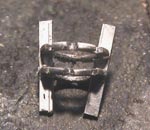
The setting will hold the central stone. It will be the main element around which the ring will be made. Two rings are turned, one 3 to 4 tenths of a millimeter smaller than the diameter of the stone, the other, slightly embossed to take on a rounded shape, will be placed on the finger.


Once the setting is finished, the band is made. Its structure must support the setting and be resistant to potential impacts. To give the ring a more open feel, the palmette decoration is added. Four rows of diamonds will be set on these palmettes.
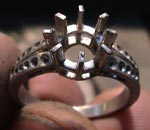


Finally comes the fitting of the setting onto the body. This is an extremely lengthy process that will require several hours of work from the jeweler. The designer will remove the metal, hundredths of a millimeter at a time, using a milling cutter. The head must be perfectly aligned along the three axes of symmetry. Next comes the setting of the stones; each diamond will be placed in its designated hole.


After the jewelry is finished, the ring will pass into the hands of the gem setter. This very specific craft involves setting the stones with metal. This art, often forgotten and little known to the general public, will transform this raw, drilled, and on structure into a jewel that will sparkle at the center of a setting…